
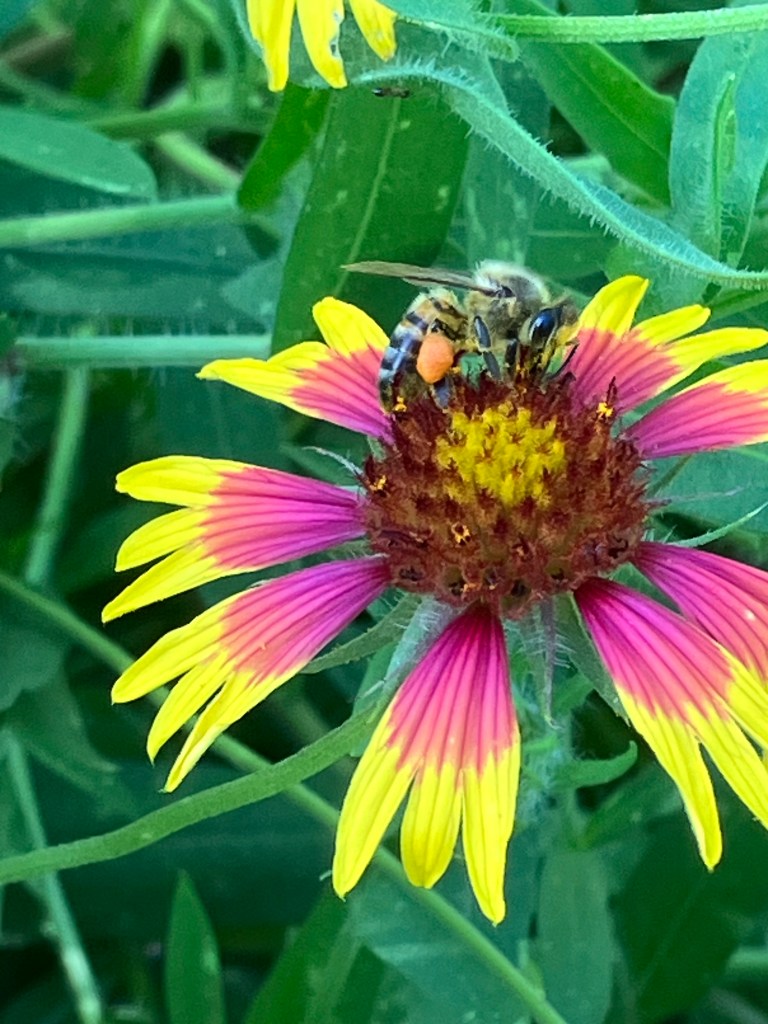
Bee City U.S.A. advocates for “No Mow May, Low Mow Spring” because less-frequently mowed lawns support greater numbers and diversity of bees and butterflies. They point out that: “Lawns cover 40 million acres, or 2%, of land in the US, making them the single largest irrigated crop we grow…When we think of habitat loss, we tend to imagine bulldozer and rutted earth, but acres of manicured lawn are as much a loss of habitat as any development site.” https://beecityusa.org/no-mow-may/#
The City of Austin’s website includes “Grass/Weeds Over 12 Inches” on its list of “Five common Code violations.” https://www.austintexas.gov/department/common-austin-code-violations#tallgrass. PennState Extension explores the history of Noxious Weed Laws, however, and debunks “myths” that natural landscapes: are fire hazards, attract vermin, harbor ticks, breed mosquitos, worsen allergies and reduce property values. https://extension.psu.edu/neighborly-natural-landscaping-in-residential-areas. Noting the “ongoing issue of municipalities misunderstanding the benefit of native plantings and their benefits to landscapes,” Wild Ones recently published “What to do when the ‘weed police’ knock on your door”: https://wildones.org/native-plant-ordinance/..
Yard equipment directly and significantly contributes to climate change. Environment Texas cites staggering national statistics that gas-powered lawnmowers produce five percent of total U.S. pollution, and Americans use three billion gallons of gasoline for yard maintenance (while spilling another 17 million gallons during refueling): https://environmentamerica.org/texas/articles/pollution-from-leaf-blowers-and-lawn-equipment/.
 North Loop Neighborhood Association