
Not all pollinators are graceful colorful butterflies or cute fuzzy bees, and some are admittedly challenging co-residents of our yards. Nonetheless, less celebrated creatures like wasps are indeed pollinators who also perform valuable pest control functions, and they too are hurting from climate change. https://www.ucl.ac.uk/news/2021/apr/wasps-are-valuable-ecosystems-economy-and-human-health-just-bees
Rather than indiscriminately killing these beneficial insects, one might carefully identify the species and assess risk to exercise tolerance and mercy whenever possible. For example, the Northwest Center for Alternatives to Pesticides notes in “Living with Bees & Wasps” that native paper wasps “can be left alone in many cases,” and that mud daubers have been described as “extremely docile”: https://www.pesticide.org/bees_wasps. Even if a nest is deemed an actual safety hazard, ethical home environmental stewardship might involve considerations of time of day and season (to reduce numeric impact) as well as non-chemical removal.
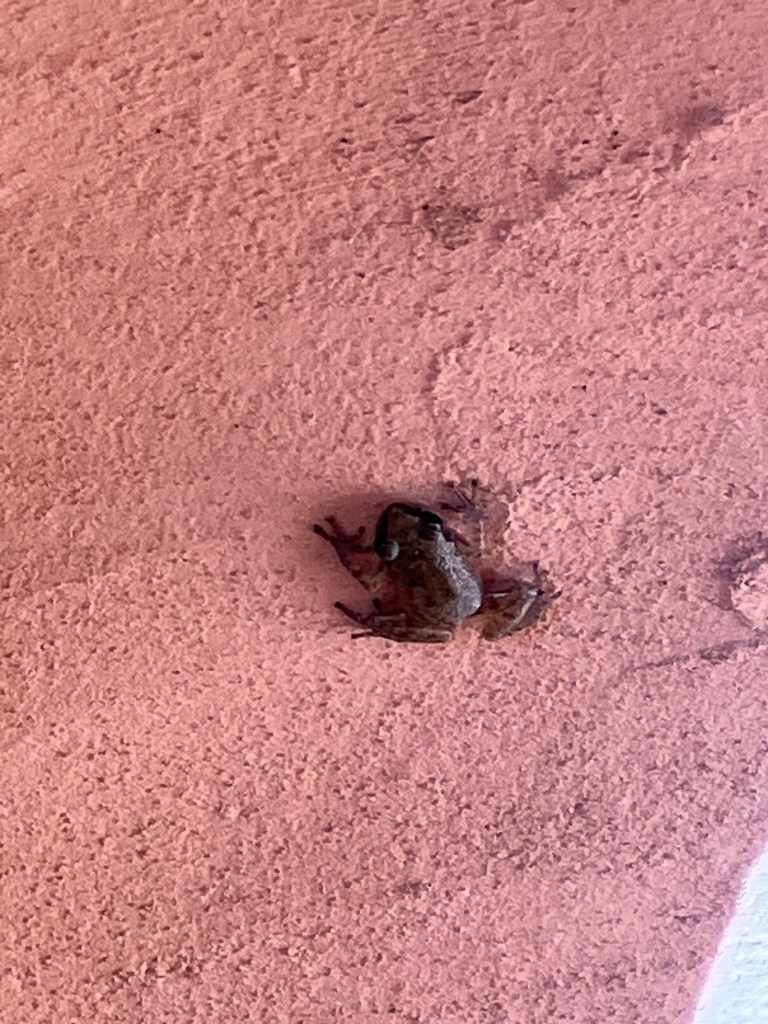
On the subject of creatures affected by our home pesticide decisions, the nocturnal chirping you hear may not be crickets, but, rather, tiny insect-eating amphibians: https://biodiversity.utexas.edu/news/entry/cliff-chirping-frog.
 North Loop Neighborhood Association