
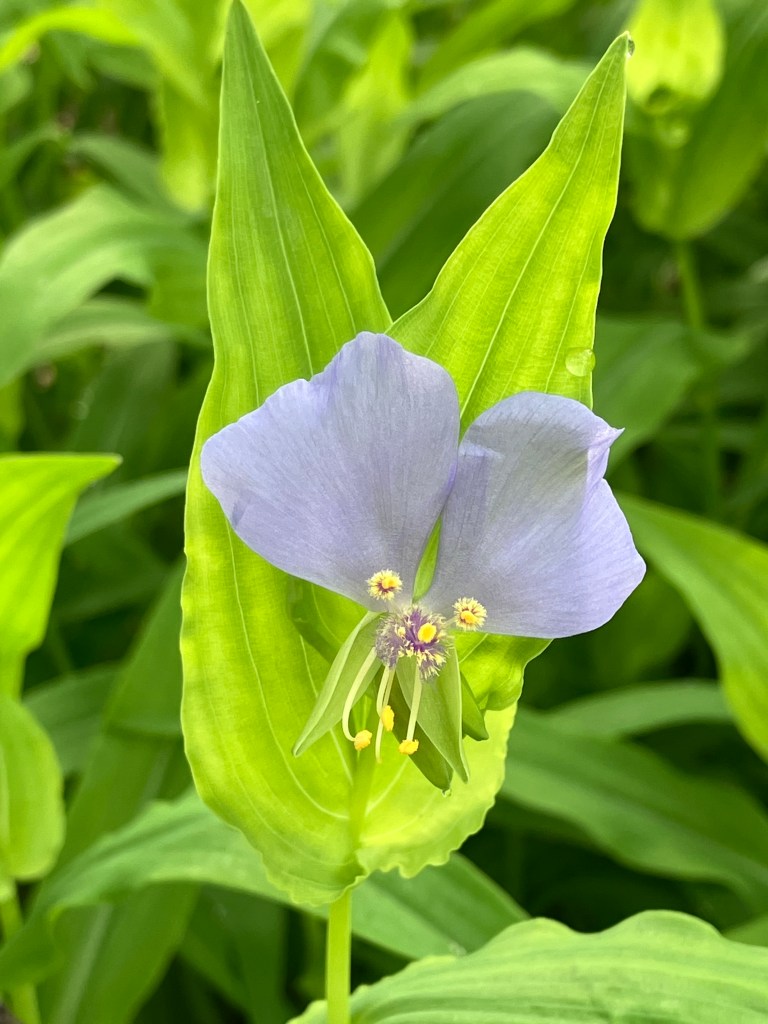
Our state wildflower adorns highways throughout Texas in the spring. https://www.tshaonline.org/handbook/entries/bluebonnet. Some North Loop yards also feature bluebonnets, but these members of the legume family “are adapted to the rocky, alkaline soils of the Hill County” and “can be tricky to get established.” https://www.wildflower.org/learn/how-to/grow-bluebonnets.
There are other native wildflowers growing happily in our local soil conditions without any effort whatsoever on our part. They may not be as famous as bluebonnets, but they are also beautiful and valuable to wildlife. Lesser-known native wildflowers deserve our appreciation even if we didn’t sow their seeds and if they came up in unexpected places. That is the grace of wildflowers—not everything has to be planned, curated and contained.
Carolina Geranium is coming up all over the neighborhood, although it is most visible in alleys where it has been spared so far from indiscriminate mowing: https://www.wildflower.org/plants/result.php?id_plant=geca5. Windflower can be spotted popping up in many local lawns: https://www.wildflower.org/plants/result.php?id_plant=anbe. False Garlic, also known inauspiciously as Crowpoison, arrives early in many yards: https://www.wildflower.org/plants/result.php?id_plant=nobi2. Finally, another poorly named native wildflower called Widows Tears (also known slightly more cheerfully as False Dayflower), will attract bees if we simply let it grow: https://www.wildflower.org/plants/result.php?id_plant=TIAN.
 North Loop Neighborhood Association