
The hits just keep on coming. The recent, highly localized microburst just piled more trauma on trees, shrubs and plants already enduring years of droughts, historic winter storms and recent fire weather. Now that we are officially in summer, your stewardship of your urban wildlife habitat is more important than ever. All living creatures, including plant life, need water. Our urban heat island means that it is even hotter here, so it is asking a lot to expect plants to survive ever harder conditions without a helping hand. Even mature native trees are showing the cumulative toll and are at risk—valuable pecans, for example, are actually native to creeks and riverbeds and may need some help shading our streets this summer. By all means, follow the watering restrictions, https://www.austintexas.gov/department/find-your-watering-day, but recognize that preserving our native tree canopy is a valid use of scarce water resources.
A lot of us are not taught, however, how to water properly. Now is a good time to get educated before the months of oppressive heat ahead of us. For those who have an irrigation system, it should be audited annually. There are even free check-ups available to qualifying Austin Water customers. https://www.austintexas.gov/department/irrigation-system-check-ups Even if you only have a hose-end sprinkler, you can measure how much you are actually watering by conducting a “catch can test” using empty pet food or tuna cans. https://txmg.org/rockwall/catch-can-test/ Then match your output to what is actually needed in current conditions by using a resource like the WaterMyYard Program (our area does not participate, but nearby Round Rock and Pflugerville do and can be used for reference):
https://watermyyard.org/#/Location Trees have specific watering considerations: https://wise.agrilife.org/files/2020/05/Trees-how-much-to-water.pdf Use the “cycle and soak” method to break the initial surface tension of parched soil so it can be a better “sponge,” and consider your soil type. https://travis-tx.tamu.edu/about-2/horticulture/basic-landscape-design/waterwise-landscaping/how-to-water-efficiently-in-central-texas/ Although this area was once prairie, your surface soil may actually be sandy fill from construction that absorbs (and loses) water more quickly than the original clay and loam.
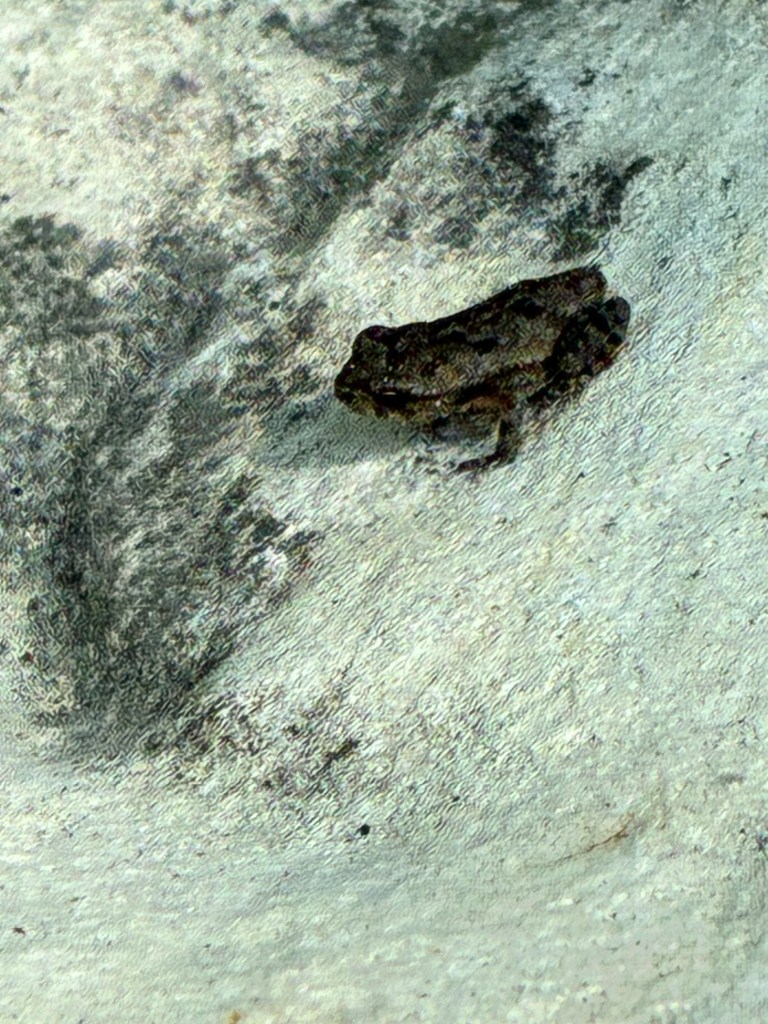
It is getting harder all the time to keep plants, shrubs and trees alive in these extreme conditions. New plants require even more water to get established. We should not expect that replacement trees are always available to us—let’s care for and keep the natural cooling resources that we already have. Wildlife (like the baby frog in this month’s photo who was spotted during the latest Waller Creek cleanup) are counting on you to preserve their vegetative food and shelter. Your human neighbors also need your shade to keep this place bearable.
 North Loop Neighborhood Association