
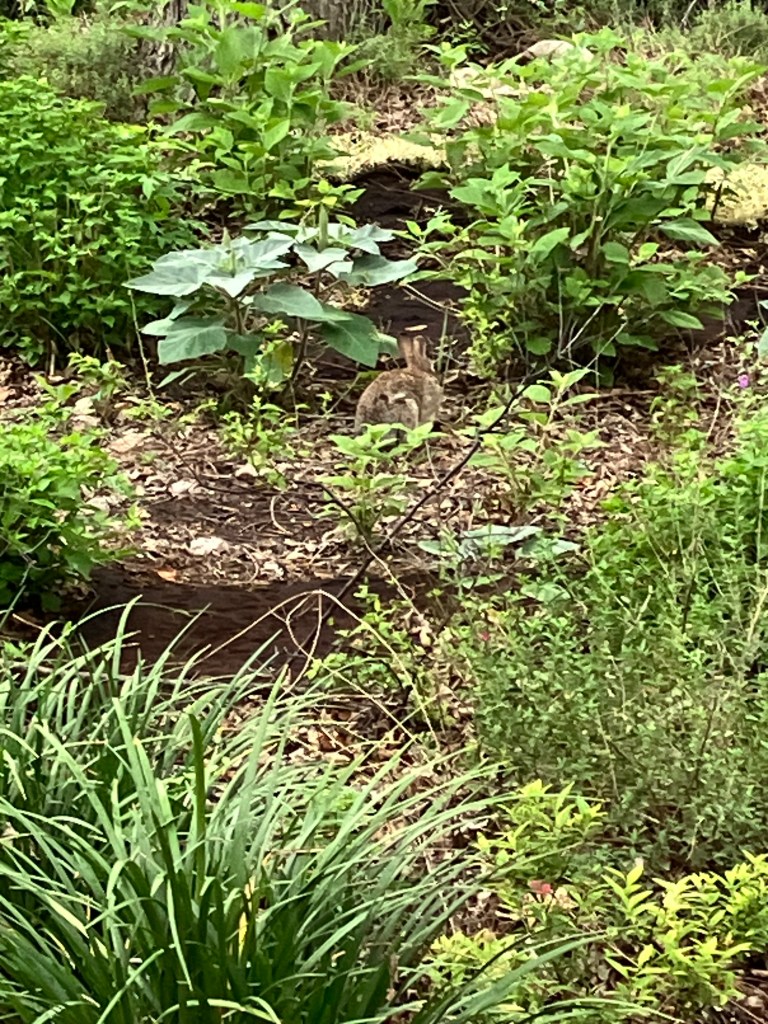
World Weather Attribution reports that: “Although 2025 was slightly cooler than 2024 globally, it was still far hotter than almost any other year on record”—and this despite El Niño/La Niña patterns favoring lower sea surface temperatures. https://www.worldweatherattribution.org/unequal-evidence-and-impacts-limits-to-adaptation-extreme-weather-in-2025/ Even if politicians are unable or unwilling to change government policy, we all impact climate change by how we manage our own yards, patios and balconies. Let’s resolve to do better as individuals in 2026 with whatever space we have available to us. Renters can create lifeline pollinator oases with container plants that they can take with them wherever they move. Owners can dedicate some of their yard space to native plants and urban wildlife. What that looks like can be different for everyone depending on time, resources, and conditions. Someone with a large, mature tree might consider allocating just a little more space to properly mulch out closer to the drip line while adding understory plants to create a sylvan sanctuary (like the one hosting an Eastern Cottontail in this month’s photo). Those with barren, weedy or monocrop areas in punishing full sun might add a small native grass/wildflower patch or butterfly garden. Alleys don’t have to be throwaway spaces but can, rather, support additional greenery.
But where to begin? Perhaps start small. That might mean putting down some cardboard (not plastic) and sheet mulching your modest future planting space to block winter weeds and restore soil health. Alternatively, it might mean planting a tree or perennial shrub now to give it a chance to get established before the long months of unrelenting heat. For those contemplating xeriscaping, two things bear noting. First, rocks are not always the answer. We do not live in the desert southwest, and our urban heat island does not need additional heat-trapping stone. Rock landscapes may look great initially, but they frequently devolve into weedy spaces that are very difficult to maintain. Consider confining stone to limited spaces such as immediately near the home (which also aids in wildfire defense) while using well-processed mulch hardscaping to cover bare ground elsewhere. Mulch is actually nourishing and can be replenished much more easily, sometimes allowing the lazy gardener to simply cover up and smother weeds. As for pathways, decomposed granite is one option, but, alternatively, hügelkultur permaculture techniques can be used creatively for water retention. Second, although xeriscaping is frequently described as “low maintenance,” that is from a relative standpoint as opposed to ornamental lawns. It is important to have realistic expectations about weeding, watering (particularly for young plants that are not yet established) and seasonal maintenance. Turf replacement and gardening for wildlife are highly rewarding, but they still require time and there is a learning curve. Plan for success by assessing what is manageable for your lifestyle so that you can fully enjoy your own private nature preserve. https://homegrownnationalpark.org/
 North Loop Neighborhood Association