
Meet Lindsey Schell, owner of Purple Cactus Gardens, a native garden design and coaching service. Purple Cactus Gardens is one of our newest North Loop Neighborhood Association business members. Below, Lindsey shares her journey into garden design, her top spring planting tips for Central Texas, and her recollections of being part of the community founding of Bruning Green back in the 2000s.
Tell us a little bit about Purple Cactus Gardens. How long have you been in business, and what services do you offer?
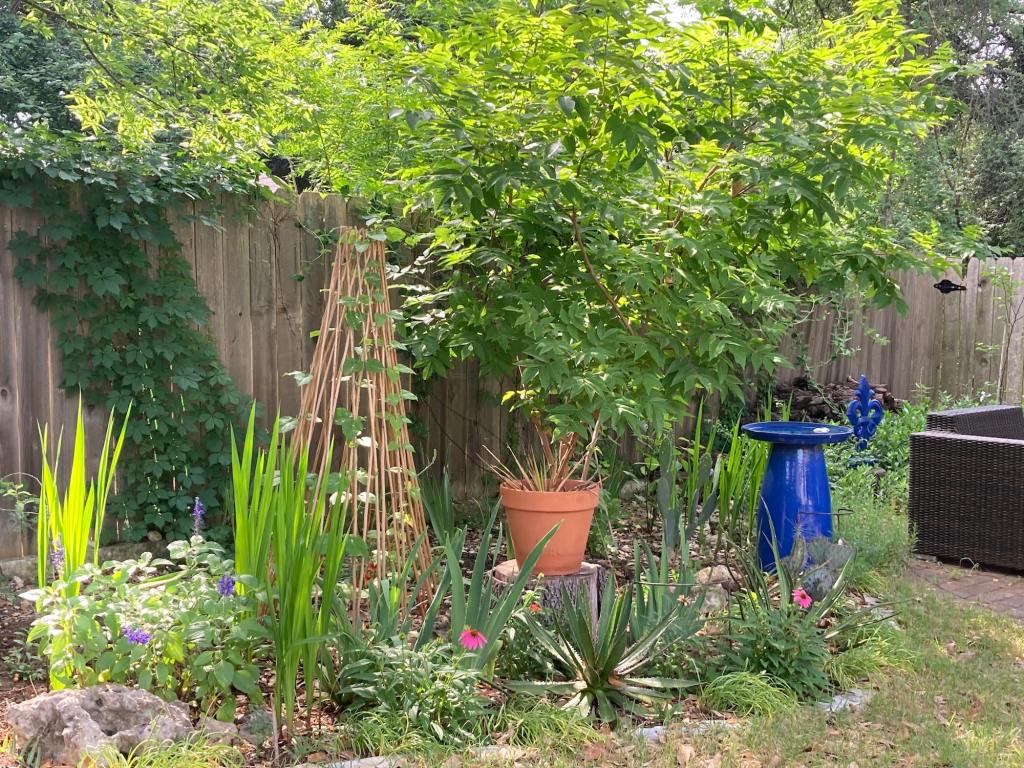
I have been offering garden design services in various forms for about 15 years with the most recent iteration of the business opening under Purple Cactus Gardens about a year ago. My practice is focused on climate resilient, low water native Texas plants and I offer custom landscape design, garden coaching/consulting and plant procurement services.
What prompted your journey into garden design?
It really started as a hobby that got a bit out of control! When I started receiving texts from friends of friends seeking planting advice, that’s when it clicked that there were a whole lot of people with the interest and initiative to grow native plants, but they needed some expert guidance to get started.
What are the advantages (both for people and native wildlife) to planting native species?
I love this question because there’s so many benefits that align to differing priorities:
- Saves money by:
- Reducing water consumption
- Eliminating fertilizer use
- Eliminating pesticide use
- Reducing replacement costs for unsuccessful non-native species
- Supports pollinators and wildlife through “Ecosystem Services”
- Slows the spread of invasive species
- Provides a sense of unique place, making Texas look like Texas
With spring planting season, what are your top 3 tips for neighbors looking to incorporate more native plants?
- Spring is a great time to add plants that our pollinators will be seeking out for sustenance through summer and fall. Perennials like Gregg’s mistflower and Zexmenia are great choices. Be sure to mulch around new plants to retain moisture and cool the surrounding soil.
- Be careful not to overwater! Native plants are evolved to handle our climate and rainfall patterns. They should be watered well at the time of planting and then about once every other week while they get established over the next few months. If we get a significant rain, skip that week. After the first year they should not need supplemental water.
- Hold off on planting any trees or shrubs until the fall. These perform much better when they have about 5 months of relatively lower temperatures to get their root systems established and fortified ahead of the following summer scorcher.
Do you have a favorite species that you incorporate into many of your designs? If so, what makes it so special?
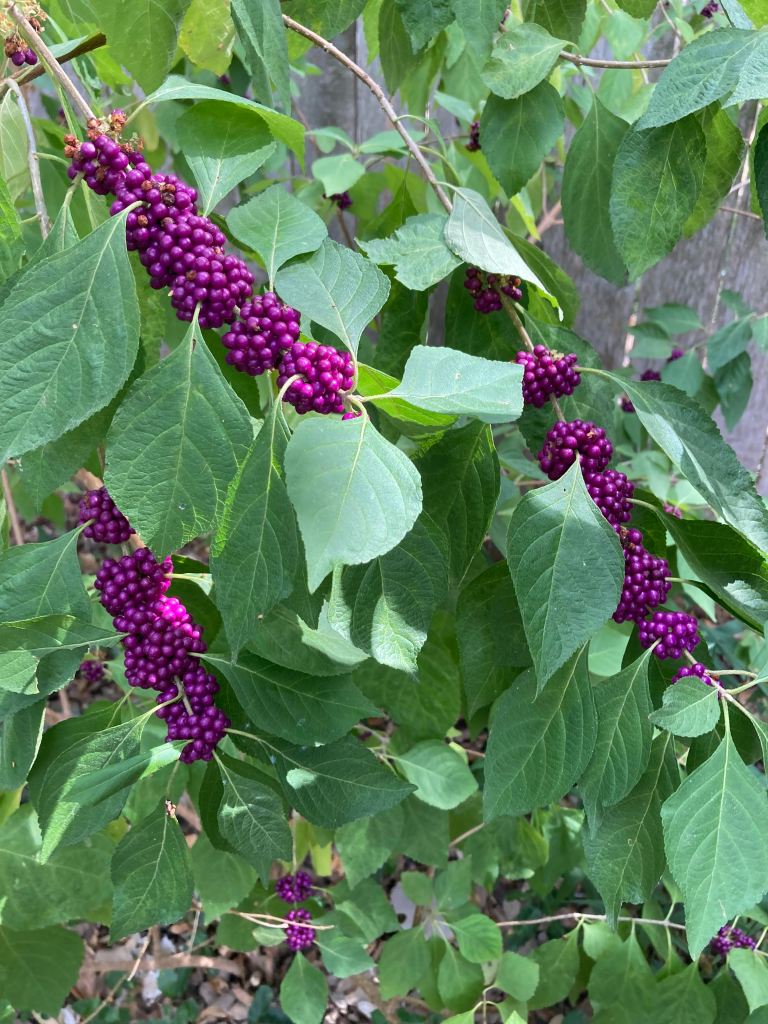
It’s incredibly hard to choose just one of Texas’ 5000 native species, but I find myself reaching for American Beautyberry (Callicarpa americana) over and over. It’s terrific for filing in a shady corner or as a companion under live oaks. It has diminutive pink flowers in spring followed by its signature purple berries in late summer. Generations of Texans have been making jelly from the berries – if they can collect enough before the birds pick them clean!
As a former North Looper and officer in the Association, what is a favorite memory of the neighborhood from the 2000s? How has the neighborhood changed, and what has stayed the same?
My favorite memory hands down was participating in the development of Bruning Green as a pivotal community gathering space. I loved working on the tile mosaic as well as the planting and meeting new neighbors. The neighborhood has continued to evolve with so many more restaurants and shops in walking distance. What hasn’t changed is the unique, independent character of the neighborhood, which of course is made possible by the continued engagement of dedicated residents.
 North Loop Neighborhood Association