
Bastard Cabbage is overtaking Texas wildflowers, and it is here in North Loop
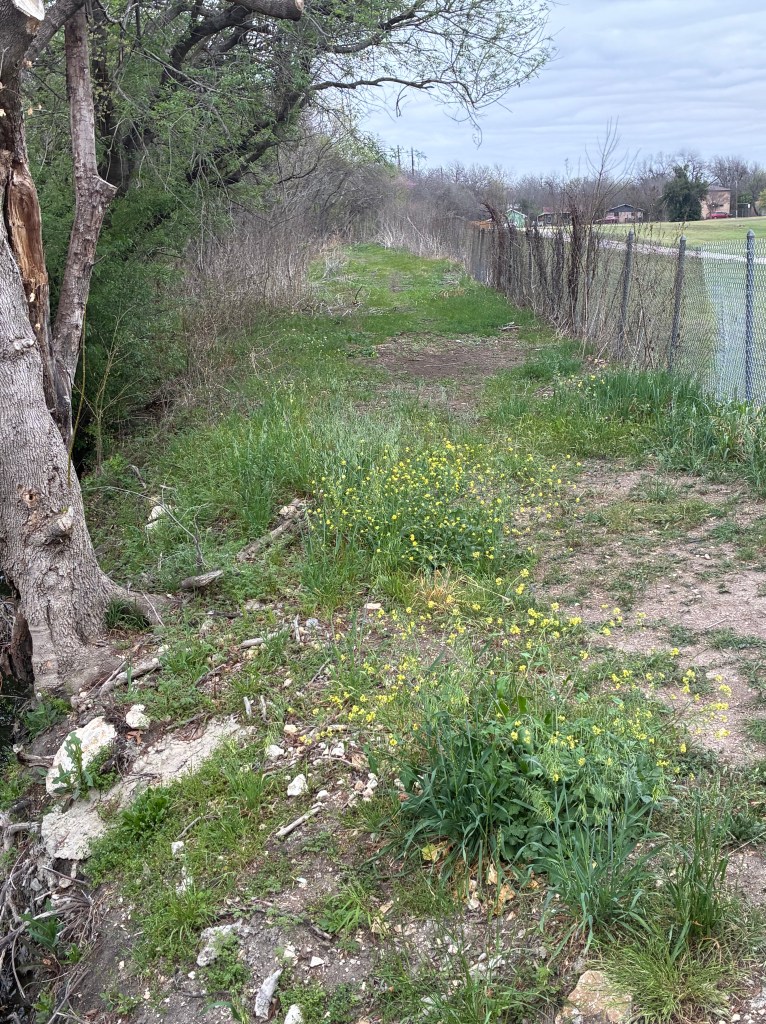
Nothing ruins a beautiful spring day like the surround sound drone of yard equipment, striking down whatever has somehow managed to grow and nourish wildlife despite our dramatic weather fluctuations and drought. Although we generally need more–rather than less–plants to cope with modern challenges, there are admittedly some plants which are genuinely problematic for our area.
The semantics can be confusing. A lot of plants are commonly described as “weeds” due to purely subjective considerations. Even the definition of “native” plants is subject to some debate. https://www.npsot.org/about/what-is-a-native-plant/ There is a difference between what may be described as “aggressive” versus truly “invasive” plants, as defined by different levels of government to specific effect. https://www.invasivespeciesinfo.gov/what-are-invasive-species & https://texasagriculture.gov/Regulatory-Programs/Plant-Quality/Noxious-and-Invasive-Plants. Among the City of Austin’s recommended list of what it considers to be the top 24 invasive species is Bastard Cabbage. https://www.texasinvasives.org/plant_database/coa_results.php?offset=12; see also https://www.invasiveplantatlas.org/subject.cfm?sub=14105. As seen in this month’s photo, Bastard Cabbage is growing now in our very own Waller Creek.
As explained by the Texas Invasive Species Institute: “As invasive species spread and take over ecosystems, they decrease biodiversity by threatening the survival of native plants and animals. In fact, invasive species are a significant threat to almost half of the native U.S. species currently listed as federally endangered.” https://texasinvasives.org/i101/ Bastard Cabbage is now ubiquitous in our roadside landscapes, establishing monocultures. Describing how Bastard Cabbage is “ousting” our native Texas wildflowers, the Texas Butterfly Ranch notes that: “Land managers suggest volunteers help by cutting the heads off Bastard cabbage and disposing of it, preferably in the trash. While the seeds inside the tiny fruits are generally not viable until they turn brown, better to play it safe and not return them to the earth.” https://texasbutterflyranch.com/2024/03/20/bastard-cabbage-a-rambunctious-and-tasty-invasive-is-ousting-our-native-texas-wildflowers/ The Lady Bird Johnson Wildflower Center cites research findings that areas heavily seeded with Indian Blanket can better resist Bastard Cabbage, https://www.wildflower.org/learn/how-to/eradicate-bastard-cabbage, so plan ahead to sow lots of that native wildflower this fall– after hand pulling any Bastard Cabbage on your own land now before it goes to seed. Some foragers are creatively participating in the struggle and have helpful tips about identification, particularly during flowering: https://foragedfoodie.blogspot.com/2025/03/identify-forage-bastard-cabbage.html
 North Loop Neighborhood Association