
Neighborhood Communication Groups
| North Loop ATX Google Groups Listserv | Email listserv for neighbors to communicate about neighborhood events, issues, crime, or other concerns. |
| North Loopers Facebook Group | Facebook group for neighbors to communicate about neighborhood events, share resources, buy/sell items, etc. |
| Gifting with Gratitude North Loop | Facebook group for neighbors to give and receive, share, lend, and express gratitude within a hyper-local gift economy. Ask for anything you’d like to receive for free or borrow. |
| North Loop Kids and Baby | Facebook group for neighbors to give and receive, share, lend, and/or request kids and baby items. |
Resilience to Natural Emergencies
Source: KUT
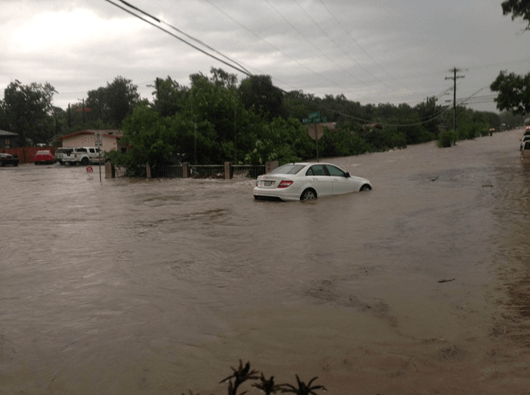
Central Texas has always been vulnerable to certain natural disasters. However, climate change has the potential to increase the frequency and impacts of threats from extreme weather. The city of Austin has identified the following as the top natural disasters Austinites face:
- Flooding: Austin is prone to flash flooding during heavy rains, especially along its urban streams, including near Waller Creek in the North Loop neighborhood.
- Wildfire: The combination of Austin’s abundant natural vegetation, high temperatures, and frequent drought exposes Austin to risks of wildfires.
- Severe Weather: Austin is experiencing an increase in extreme weather patterns, from the persistent lows of 2021’s Winter Storm Uri to increased summer highs exceeding 100 degrees. On March 21, 2022, six tornadoes occurred in Central Texas.
- Pandemics: Enough said.
The City of Austin coordinates with multiple organizations, government and private, in planning for and responding to natural disasters. An organization responsible for coordinating emergency responses in Austin is the city’s Office of Homeland and Security Management. Not surprisingly, the city relies heavily on its routine operational functions, such as Austin Energy, Watershed Protection, and the Fire Department to respond to natural threats. Due to the importance of climate change in increasing risks for the city, the Office of Sustainability plays an increasing role in preparing for weather-related challenges.
Household Disaster Preparedness
Make a Plan
Planning involves developing an understanding of the significant risks that natural disasters could pose to your housing, your household members, and your pets. Is your housing in or near the floodplain or poorly-insulated, for example? Do you have children or household members with special medical needs or limitations? In what circumstances should you shelter-in-place and in what type of events should you plan to evacuate? What can you do to make your home more resilient to natural disaster threats? (The table below contains links to additional information on resources on emergency preparedness.)
Build a Kit
Once you have completed some planning, you should consider building two “kits.” The first kit is to ensure that your household has enough supplies on hand to shelter in place for several days. The second “kit” is to ensure your household has items it would need if you had to evacuate to another location for safety.
Know Your Neighbors
Natural disasters can potentially affect the entire region, impacting the ability of the City of Austin to respond timely to some requests for assistance. Knowing your neighbors and identifying those who might need extra help during a disaster is critical to increasing Austin’s disaster preparedness. If you can help one of your neighbors, that could be one less emergency call that needs to be made.
Stay Informed
Download the Ready Central Texas app on your mobile phone and/or sign up for emergency notifications to your telephone, email, or text messages.
Local Emergency Preparedness Resources
| Category | Discussion | Resources |
|---|---|---|
| Planning | Get Prepared: A comprehensive resource for emergency preparedness in Austin. | Emergency Preparedness Guide |
| Emergency Kit and Evacuation Bag Guidance: Consider your individual risks when tailoring this “ultimate” checklist to your own needs. | Ultimate Emergency Kit Checklist | |
| Resilience Hubs: The City of Austin is working with Travis County and the Austin Independent School District to develop local resilience hubs where vulnerable residents can gather and receive assistance, if necessary, during disasters. | We will update as more information becomes available. | |
| Climate Preparedness: The City of Austin provides guidance on climate preparedness. | Austin Climate Preparedness | |
| Stay Informed | Ready Central Texas: The City of Austin and Travis County developed this free mobile app to provide resources and information in preparation for natural disasters and other emergencies. | Apple Store Link Google Store Link |
| Emergency Notifications: The Capital Area Council of Governments provides registered recipients to receive emergency notifications by phone, email, or text. | Register for Emergency Warnings | |
| Flooding | Know your flood risk: The City of Austin has identified structures in the North Loop neighborhood that are closest to Waller Creek as having higher risks of flooding during extreme rain events. | Austin Flood Risk Information |
| Road Closures Due to Flooding | Road Closures Due to Flooding | |
| Fire | Wildfire: Wildfires are an increasing risk in the state, in part due to our warmer climate and worsening droughts. | Texas Wildfire Incidents Tracker |
| Fire Regulations: The City of Austin prohibits unpermitted open burning and significantly limits the use of recreational fires near structures and combustible material. | Austin Fire Regulations | |
| Severe Weather | Medically Vulnerable Individuals: Severe weather can result in the interruption of utilities. However, the City of Austin can provide additional support services to registered individuals with qualifying, vulnerable medical conditions. | Services of Medically Vulnerable or call Customer Care at 512-494-9400 |
| Austin Energy: Austin Energy’s web site allows residences to view and report power outages, as well as to sign up for outage alerts by text. | Austin Energy Outage Information Having trouble? Call 512-322-9100 | |
| Pandemics | Austin Public Health provides information and services related to various medical conditions, including COVID-19 and influenza. | Austin Public Health |
Crisis Response Resources
In addition to natural disasters, neighborhood residents may occasionally experience challenges across a wide range of situations, such as meeting basic human needs, mental health, housing, etc. The City of Austin has various departments that provide client-based services, as appropriate, to provide assistance in these types of situations. A number of community-based organizations and non-profit organizations also work in this area. While the NLNA does not provide such services itself, we do want our residents to be able to locate these services, as necessary.
| Category | Discussion | Resources |
|---|---|---|
| General Assistance | Austin 3-1-1: The general source to obtain information about CIty services and assistance. | Telephone: 3-1-1 (if calling from out of the area: 512-974-2000) Austin 3-1-1 |
| The Central Texas United Way: manages a website and call center for a range of emergency and general support programs. | Telephone: 2-1-1 Central Texas United Way 2-1-1 | |
| Aunt Bertha also manages a list similar to 211’s. Sometimes there is different information and it can help locate additional support. | Aunt Bertha | |
| Food | Central Texas Food Bank | Central Texas Food Bank |
| Manos de Cristo Food Pantry | Manos de Cristo Food Pantry | |
| Health Care | Central Texas Health | Central Texas Health |
| Emergency Mental Health | Integral Care, the local mental health authority, manages a 24/7 mental health crisis support line. | For immediate mental health crisis support, call 24/7 at 512-472-4357. |
| Emergency Shelter | Most programs have waitlists for shelter and housing support. If you or someone you know is at risk of losing their housing or escaping an abusive domestic situation, get on the waitlists as soon as possible and check in with the agency about a spot regularly. | ARCH: single adult men only, call ahead to see if a bed is available. Salvation Army: offers a shelter downtown for single adults and families. Also has a shelter in East Austin for Women and Children. Call for more information and availability.SAFE- provides shelter and housing for unhoused youth and families escaping DV. Call or text the 24/7 hotline for information:Call: 512.267.SAFE (7233)Text: 737.888.7233To take a Coordinated Assessment and get on the wait list for case management and housing through the homeless services system see this list of locations and times– call ahead if possible to schedule your appointment. |
| Recovery of Family Heirlooms | Disaster Response and Recovery Guides for Family Heirlooms | Disaster Response and Recovery Guides for Family Heirlooms |
 North Loop Neighborhood Association