
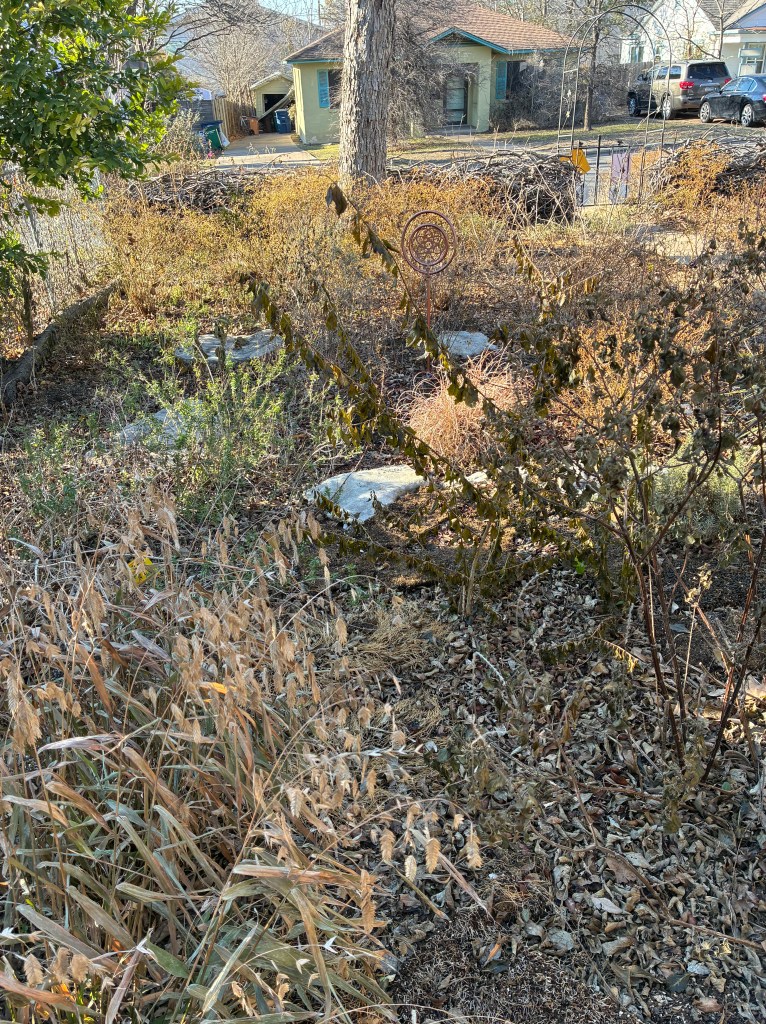
Not a pretty picture, is it? This is the yard shown in last month’s blog, but after the recent Arctic front. Although it might not inspire admiration on Pinterest, this is an important phase of urban wildlife gardening that deserves our respect and patience. There are wildflowers preparing to bloom in the spring. The leaf litter, steams and branches as seen in the photo are allowing invertebrates to overwinter. https://xerces.org/leave-the-leaves Mockingbirds were able to sustain themselves during the recent freeze on the fruits of chili pequin bushes (that were not deliberately planted, but which were allowed to survive as understory plants for a mature pecan). The vegetative matter in this photo will be left as natural “insulation” for these plants in the event that we experience additional freezes this month.
A brown, dormant lawn and barren trees are tolerated, but there is often uncertainty or haste about perennial shrubs and other plants. To be fair, it can be unclear what is still alive, but there are helpful resources to assist with these inquiries: https://tngaustin.com/freeze-maintenance/ More fundamental, however, is a human desire to impose “order” on landscapes that do not meet conventional aesthetic standards. By rushing, however, to strip our yards of any decay, we actually impoverish their ability to support abundant life.
Although the average date for the last frost of spring is March 2 in our area, https://www.almanac.com/gardening/frostdates/zipcode/78751, climate change makes observing current conditions even more important. Letting your garden “sleep in” means paying attention to when temperatures are reliably above the 50s. “No Mow May” (https://beecityusa.org/no-mow-may/) needs to start sooner in this part of the country where the growing season starts earlier, but the principle of preventing habitat loss in our own yards still holds. By all means observe the weed ordinance, but not every plant “volunteer” in your garden is a weed. For example, Horseherb or “Straggler Daisy” (for the little yellow flowers we see on this ground cover) is actually a native plant that provides valuable sustenance for pollinators when other food sources are scarce. https://www.npsot.org/posts/native-plant/calyptocarpus-vialis/ Your patience and mercy matter to struggling wildlife populations.

