
April gave us a very welcome reprieve from our long dry streak. When we as renters or landowners think about harvesting rain, rain barrels or large cistern systems frequently come to mind. Some people may have heard about rain gardens and other forms of “rainscaping.” (There are helpful rebates for these worthwhile activities: https://www.austintexas.gov/water/programs/rebates-tools-programs). We may have seen local road signs when we are “Entering Edwards Aquifer Recharge Zone,” and maybe we are familiar with Water Quality Protection Lands. https://www.austintexas.gov/water/water-quality-protection-lands It can be easy to assume that only specific vessels, zones or large land holdings store water. But the reality is that individual micro-stewardship of our own outdoor living spaces affects water retention, as well as the condition of local shared resources. Runoff from our home properties, for example, goes directly from our storm drains to our creeks. One consistently neglected area of individual water stewardship concerns soil quality.
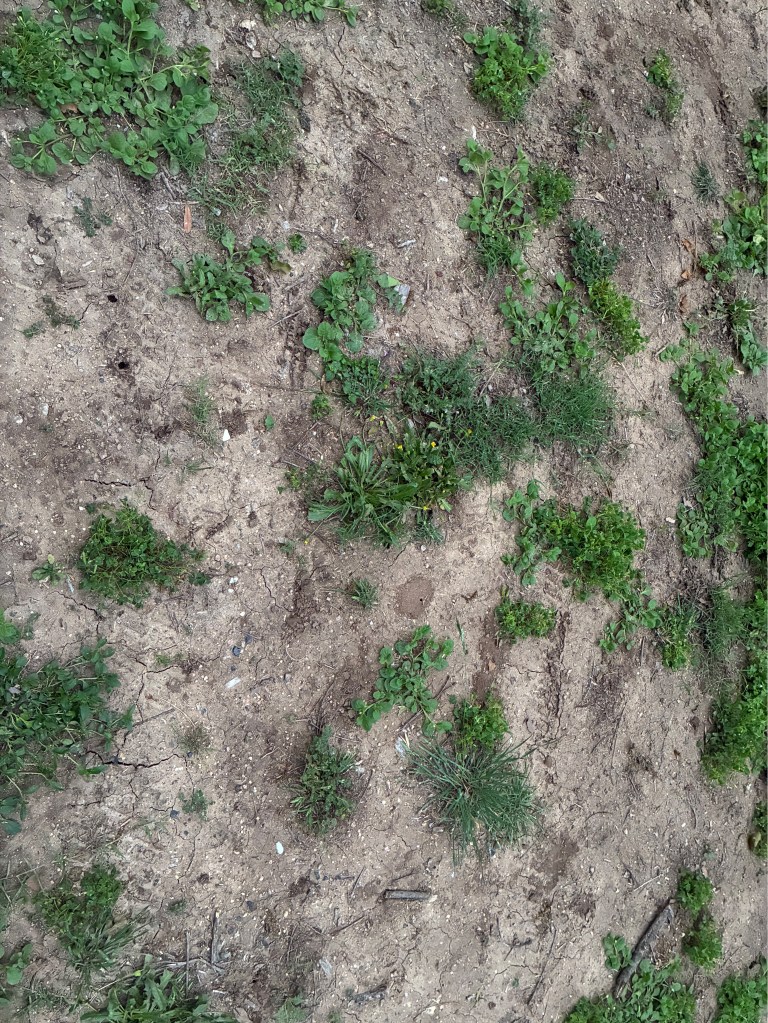
Not all “dirt” is equal. Impervious cover aside, neglected and abused soil itself cannot absorb or retain water effectively. This matters on a public scale in this Flash Flood Alley, and it matters on a private one when we want to preserve cooling vegetation around our homes during our punishing summer droughts. Urban soil suffers from foot and vehicular compaction, as well as functional “strip-mining” of organic nourishment from modern landscaping aesthetics and practices. The yard in this month’s photo, for example, has been over-mowed for years after complaints about weeds or grass height. Despite an unusually wet spring and rain earlier that very same day, the eroded earth is already visibly baked and cracked.
Water can be stored in soil, and we can all do our part to preserve this precious resource in our own yards. Permaculture techniques can be used to slow, spread and sink water into the landscape. https://www.wildhomesteading.com/store-water-on-your-homestead/ Even if we don’t avail ourselves of the city’s mulch, compost and core aeration “Landscape Survival Tools” rebate, we can all: mow lawns higher, allow lawn clippings to mulch in place and leave more organic matter such as fallen leaves on the ground.
 North Loop Neighborhood Association